We start with your market, your target price and the business you need to build. Then we design the wine, the production and the supply system around that.
From vineyard to shipment, one company answers for making it work — and for keeping it working as the business grows.
The hard one arrives three years later, at triple the volume, with the same expectation.
Wine programmes for importers, retailers and brand owners who need supply that does not break when the business grows.
Consistency is not promised. It is held up by assets
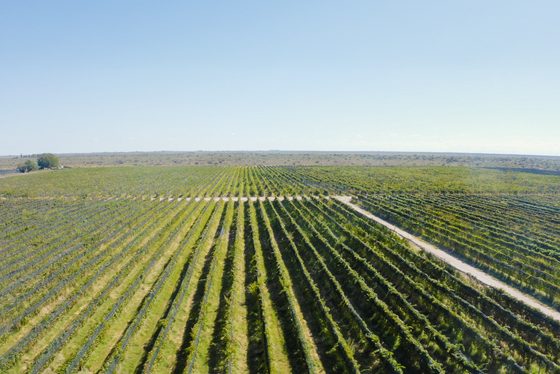
370hectares
of our own in Mendoza
8million litres
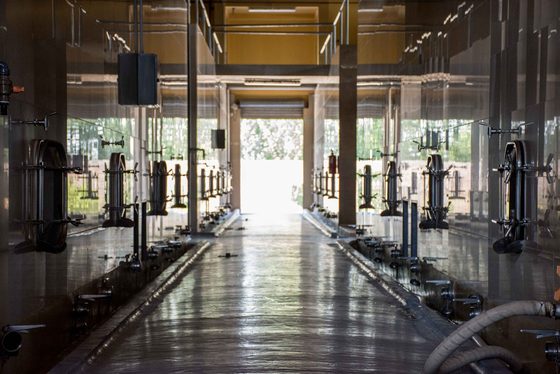
of winery capacity
30million litres
of annual throughput
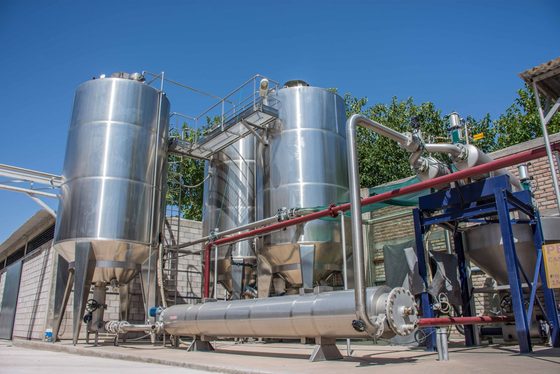
Thermovinification
our own, to hold the profile
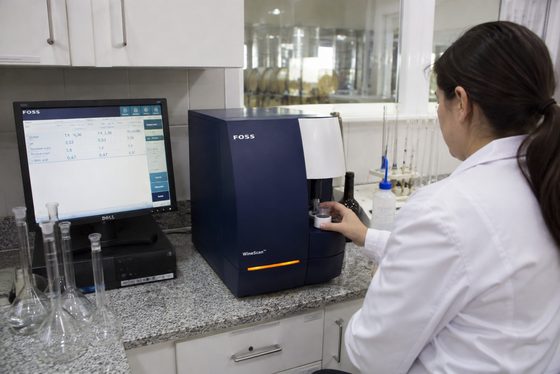
Labon site
no lot moves without analysis
None of these figures is a record. Together they explain why we can commit to what a broker cannot: that in five years the wine will still be the same wine.
Philosophy
We negotiate the beginning of the next deal
A transaction closes in weeks. A programme holds for years. Both get signed the same way; only one builds anything.
No agreement is designed to maximise the first sale. It is designed to make the client want to come back, which is more demanding: it requires a price that funds the service, a margin that works for them, and the real capacity to deliver in a hard year.
We wrote this way of thinking into a book. It is not marketing material: it is the standard decisions get made against in here.
Corbeau makes wine. What decides how it gets made is not oenological: it is economic.
Before settling a blend we ask what price it has to hit on the shelf, what it competes against, what margin the importer needs, and what has to be true for that product to still exist in five years.
An estate winery starts with the wine it wants to make. We start with the business that has to be built.
Our history
Third generation. The same ground
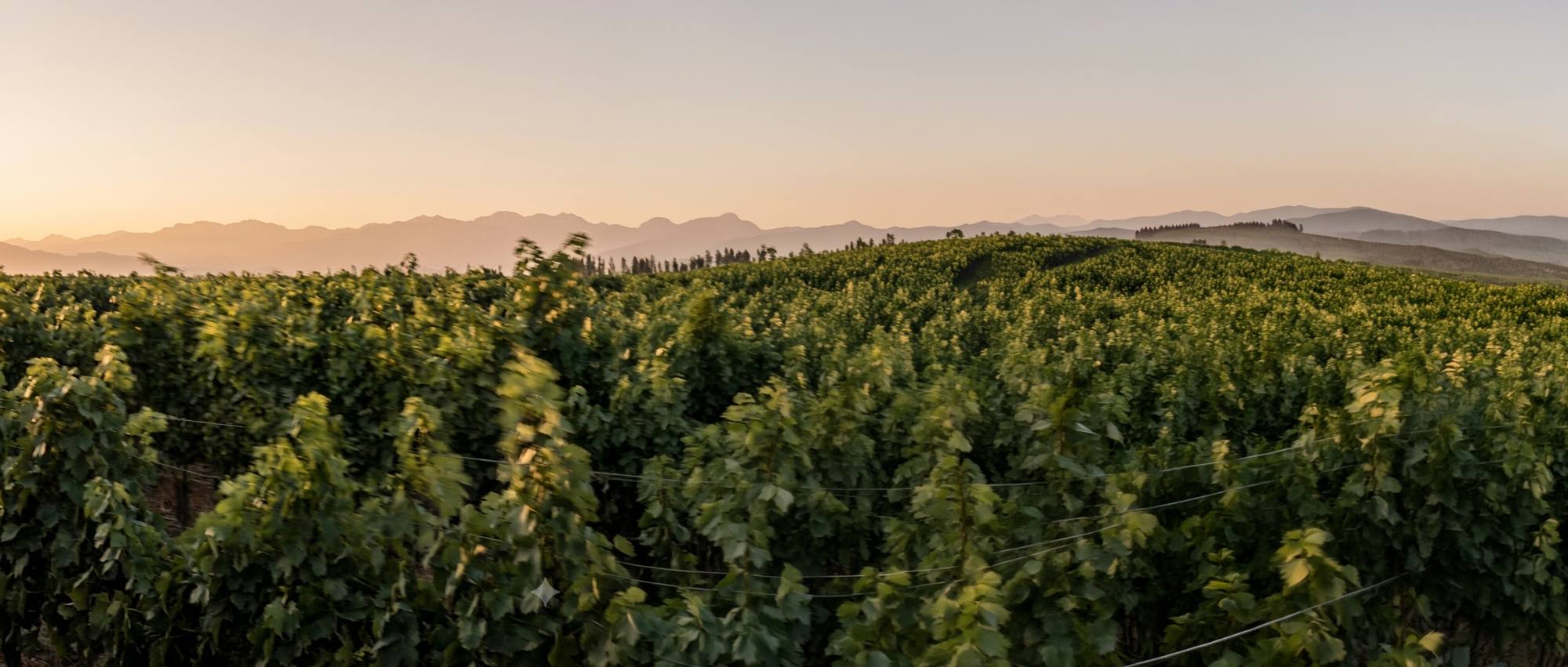
The Rodríguez family has made wine in Mendoza for three generations. The winery sits in eastern Mendoza and works fruit from its own vineyards, spread across different zones, soils and altitudes.
That spread is not picturesque. It is a tool: it lets us compose the same profile from different origins when a year turns difficult in one zone and we still have to deliver.
Three generations do not make us better. They make us findable: everyone knows where to find us next year.
Leadership
Who answers when something goes wrong
In a family company the person who decides is the person who picks up the phone. There are no three approval layers between your problem and whoever can solve it.
That has a cost: we cannot hide behind a procedure. And an advantage: we do not try to.
Culture
What we do not do
It is easier to describe a company by what it refuses.
We do not promise lead times we cannot meet in order to win an order. We do not quietly adjust quality when the harvest comes in badly: we say so beforehand, even when it costs the order. We do not accept a price that will not fund the service that price promised.
Every one of those decisions cost us specific business. That is the price of a word that still means something.
Certifications
What an outside auditor can verify
Trust begins in conduct and ends in a document somebody outside can check.
Our commitment
Sustainable means it is still there later
We look after water, soil and by-products because a vineyard is a fifty-year asset and gets managed as one.
The part almost nobody names is the economic one. A supplier without margin stops investing, stops controlling and ends up failing to deliver. A programme that only works by squeezing the weakest link has an expiry date.
A sustainable business is one where every party has reasons to continue.
It fails in a tank cleaned badly, in a lot blended without a record, in an analysis that arrived late, in a container that shipped without approval.
Our vineyards
370
hectares we do not have to go looking for
In bulk, most sellers are selling wine they bought. Their quality depends on what they can source that year and at what price.
We start from vineyards we own or control. That does not make us better winemakers: it makes us predictable.
We commit volume knowing where it will come from.
Terroir
Several origins for one profile
An estate wine expresses a place.
An international programme needs the opposite: a profile that holds even when the place changes.
Vineyards across different zones, soils and altitudes let us offset a weak year in one with what another delivered, and ship the same bottle.
Three origins, two hundred metres of altitude between them.
Vineyard management
It is decided at pruning, not in the winery
The profile is settled before harvest: crop load per vine, irrigation, picking date.
We work backwards from the commercial objective. If the programme needs fruit, the vineyard is managed for that. If it needs structure, it is managed differently.
The agronomic conversation starts with a price.
Winemaking process
The objective is not the best wine. It is the same wine
Any winemaker makes an extraordinary wine once. Making it eight years running, across eight different harvests, is another problem entirely.
Yeasts, temperatures, maceration and final blend are all subordinated to a profile documented with the client.
Nothing is improvised, upwards or downwards.
Thermovinification
The tool that rescues the difficult year
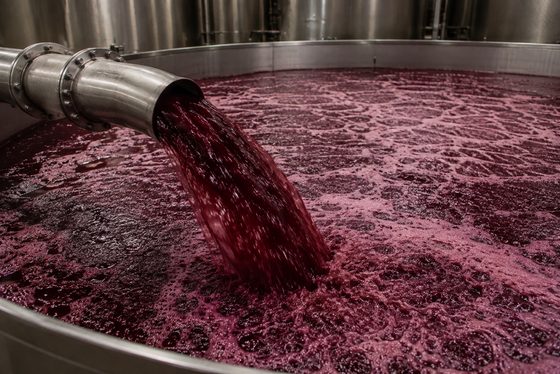
It applies controlled heat to the fruit before fermentation. It extracts colour and fruit far more efficiently than traditional maceration and reduces the dependence on a perfect harvest.
It solves the most expensive problem an international programme has: vintage variation. It reaches the colour and intensity committed to in a year that would not have delivered them on its own.
It is technology, not magic. And it is one reason we can commit to a profile across several years.
Traditional macerationThermovinification
Colour extraction
Depends on the quality and ripeness of that year’s fruit.
The target is reached even when the harvest does not cooperate.
Process time
Days of maceration per tank.
Hours. It frees tank capacity in the middle of harvest.
Vintage variation
It carries into the bottle and the consumer notices.
It is corrected inside the range agreed with the client.
Multi-year commitment
Signed vintage by vintage.
Lets a profile be committed across several years.
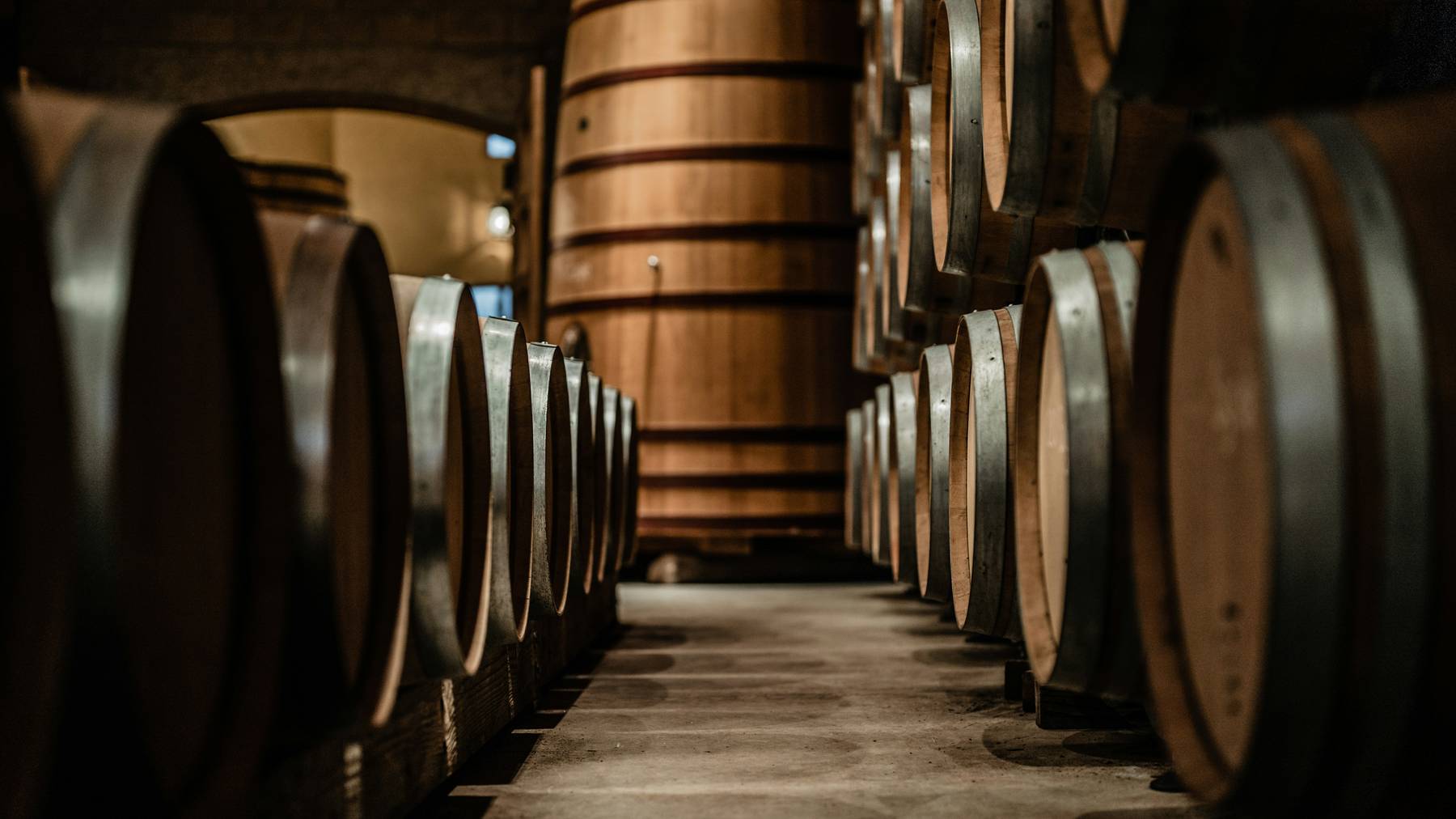
Tanks and barrels
8 million litres. Capacity to move 30
Concrete, steel, American and French oak. Each material for what it does, none out of tradition.
The figure that matters is not how much we store, but how much we can move.
A supplier without spare capacity becomes a problem the day your programme starts working.
Total capacity
8 million litres of winery capacity
Annual throughput
30 million litres
Oenological laboratory
No lot moves without numbers
The laboratory is on site: physical, chemical and sensory controls from fruit intake to dispatch.
When a client asks why this shipment differs from the last one, the answer is not an opinion.
Laboratory on site · FOSS WineScan analyser
Innovation
Research with a commercial question behind it
We trial varieties, techniques and formats, never out of curiosity. Every line starts with a real problem: a price to reach, a package to lighten, a profile consumers are starting to ask for.
What works goes into production. What does not gets dropped, and said so.
Reviewing trials with the technical team
Quality control
What happens when something goes wrong
It will go wrong at some point. Over more than forty years of operation, it goes wrong.
What defines a supplier is not the absence of problems: it is what they do in the hour that follows.
You are told the moment it is found. How fast the warning comes is what defines a supplier, not the absence of problems.
First it gets fixed. The lot, not the conversation.
Then the process gets corrected. So that particular error is no longer available.
The client hears it from us. And before the problem reaches them.
Traceability
From container back to vineyard
Any bottle or flexitank can be reconstructed to its origin: which lots compose it, which block each came from, what analysis it carries, who approved it.
Useful for a claim. Useful for an audit. And above all, useful for repeating a wine that came out well.
Starting point
Container shipped
Shipment number
Certificate of analysis
Destination documentation
Step 2
Dispatch lot
Signed approval
Retained sample
Step 3
Blend and tank
Blend composition
Analysis per tank
Step 4
Winemaking
Process record
Temperature curve
Origin
Block and harvest
Estate and block
Picking date
Intake analysis
Logistics
The wine is not delivered until it arrives
We coordinate shipment, documentation and the destination’s technical requirements, which vary by country and change without warning.
A perfect wine that arrives late is a wine that failed.
Sustainability
A vineyard is a fifty-year asset
Water, soil, by-products. Not as a communications programme: as the management of an asset that has to keep producing when none of us is here.
Varieties and blends. Sensory profile. Alcohol. Residual sugar. Oak. Bottle, flexitank. Labelling by destination.
From one container to annual programmes.
FormatMinimum volumeEstimated lead timeUsed when
Flexitank
24,000 litres
15 days from PO
Bulk for bottling at destination.
Bottle · client’s label
Depends on the project
30 days from PO
Private label and own brands, shelf-ready.
Annual programme
Set by the programme
Full season
Committed volume against a documented profile.
Markets
Every market is a different problem
A wine that works in one country fails next door on shelf price, labelling, dominant channel or consumer taste.
We do not export the same wine everywhere. We design towards the market.
Programmes running today in:
North America
United States
Canada
South America
Brazil
Peru
Ecuador
Europe
United Kingdom
Germany
Spain
Netherlands
Asia
Japan
China
The list says where we are, not how far we go. If your market is not on it, the work starts the same way: with the same questions about shelf price, labelling and channel.
Bring the problem, not the order
A market, a target price and an estimated volume are enough to begin.
The bulk market runs through intermediaries. They buy wherever it suits that year and resell. Their ability to commit to quality ends where market availability ends.
Fine for one transaction. It stops working when you need the same wine five campaigns running.
The difference
We produce what we sell
370 hectares of our own, our own winery, our own laboratory. When we commit to a profile, we are committing to something we control: the fruit, the process and the tank.
That changes the price conversation.
Broker / intermediaryIntegrated producer
Control of origin
Buys whatever the market has that year.
Vineyards owned or controlled, managed to a plan set before harvest.
Multi-year commitment
Holds for as long as the market allows.
Signed against our own capacity and a documented profile.
Response to a difficult harvest
Passes the problem on: reformulation, price or delay.
Offsets between origins and uses thermovinification to hold the profile.
Traceability
Reaches the supplier who sold it to them.
Reaches the block, with analysis and a signature per lot.
Who answers
Coordinates between winery, carrier and client.
From vineyard to shipment, the same company answers.
A broker quotes what he found. We work out how to reach your number.
Vintage consistency
The hidden cost is called vintage variation
It gets paid in reformulations, in product rejected at destination, in a consumer who notices the wine changed.
Thermovinification
To stabilise colour and fruit when the year does not deliver them on its own.
Several origins
To offset a weak year in one zone with what another delivered.
Analysis per lot
Against a documented profile, before the lot moves.
We do not eliminate variation. We keep it inside a range your business can absorb.
Scale
Room for your programme to grow
Spare capacity is a commercial function. We run with deliberate headroom so we can say yes when your volume doubles.
8million litres
of installed capacity
30million litres
of annual throughput
The distance between the two figures is the headroom left the day your volume doubles.
Segments
From entry price to exclusive development
Entry wines with the profile built to the price. Premium programmes. Exclusive blends. From a single flexitank to annual commitments.
Entry
Profile built to a defined shelf price. Volume and regularity.
Premium
Programmes that demand a profile held campaign after campaign.
Exclusive blends
Blends developed for one client and their market.
Annual commitment
From a single flexitank to a volume committed by the year.
How it works
Five steps, and a reference that does not move
Step 4 is the one that changes the relationship: from there on there is a written profile against which everything that follows is measured.
01
You tell us the price you need to hit, the market and what it competes against.
02
We propose profiles with their composition and cost.
03
We send samples. We adjust until it is the wine.
04
The approved profile is documented. It becomes the reference for every shipment after it.
05
Every shipment is analysed and approved against that reference before it leaves.
Discuss a bulk programme
A market, a target price and an estimated volume are enough to begin.
Your brand is the asset. We are the infrastructure
When a retailer builds their own brand, they are building something that belongs to them: a margin they do not share, shelf space they control, an asset that gains value over the years.
Our job is to make that possible without appearing anywhere.
Discretion
The right producer is the one nobody notices
We do not use private label projects as commercial references without express authorisation. We do not show our clients’ labels. We do not tell your competitor what is working on your shelf.
The brand is yours. The consumer is yours. We stay behind.
Backwards from the price
We start with the number, not with the wine
A private label project has a shelf price, a channel margin, a logistics cost, a tax and a tariff. What is left is the wine that can be made.
First we close the economics. Then we design the product that fits inside them.
The other way round, you end up with an excellent sample nobody can sell.
Starting point
The price your wine has to reach on the shelf
−
Retailer margin
It changes with the channel: a supermarket chain does not ask for the same as a wine shop or an online store.
−
Importer or distributor margin
It depends how many steps sit between the winery and the shelf. Sometimes one, sometimes two.
−
Domestic taxes in the market
Every country has its own, and they do not levy alike: some by value, others by volume or by alcohol content.
−
Import tariff
It depends on the trade agreement in force with Argentina in that destination.
−
Logistics, insurance and clearance
It varies with the format, the distance, the time of year and the exchange rate.
−
Packaging: bottle, label, closure and case
This is the part the project can move on purpose. Lightening a bottle frees cents that go back into the wine.
=
What is left is the wine that can be made
That number — the available cost per litre — is what defines variety, blend, ageing and oak. Not the other way round.
How much each component weighs changes with the market and with the project: there is no single proportion that fits all. What does not change is the list, and the order they are subtracted in.
What is included
How far we go
We do not do the brand work. Positioning, name and design are yours. We can offer judgment, but we are not going to pretend we are an agency.
Profile and samples
Varieties and blends
Full technical specification
Formats and packaging
Destination labelling
Production, lot control and shipment
After launch
The first order is the easy part
A private label is decided on repeat orders: the second production identical to the first, volume that can expand when rotation supports it, the wine still available when the chain adds it to another region.
That is where the control system matters. And where most private label projects break.
A company that only produces for others never sees what happens after the sale. It does not see the shelf, the reorder, or whether the consumer came back.
In our brands we put up the capital and take the consequences. What we learn there is what we bring to somebody else’s brand.
It is the most honest form of market research: the kind paid for with your own money.
The portfolio
Two brands, two different problems
Mad Bird
For a consumer looking for intensity and a proposition that does not resemble the rest of the Argentine shelf.
Not the most awarded. The one that occupies a precise place on a shelf, at a price that works, and rotates.
Designing that wine is a commercial problem before it is an oenological one.
The starting point
Three facts, and the rest follows
Shelf price. Market. What it competes against.
Everything else comes out of that: the available cost per litre, the fruit that cost allows, the process, the format, the bottle weight, the closure. Every technical decision is a consequence of an economic constraint.
A project that starts with «we want a premium Malbec» has not started yet.
Shelf price · market · competition
The only three facts needed to begin.
Available cost per litre
What is left after margins, taxes, tariff and logistics.
The fruit that cost allows
Zone, variety, yield and picking date.
Process
Thermovinification or maceration, yeasts, temperature, oak.
Format and packaging
Bottle and its weight, closure, destination labelling.
Development
Samples until it is the wine
We prepare options against the agreed profile. You taste, correct, ask again. We adjust blend, ripeness, oak, sweetness, acidity. It does not get rushed.
A sample approved with doubts becomes a two-hundred-thousand-litre problem.
Validation
Before production, everything is frozen
The approved profile is documented: analytical parameters, composition, sensory description. That document is the technical contract for everything that follows.
It is what lets someone reproduce the same wine four years from now, with another harvest.
Analytical parameters
The numbers that define the profile and against which every lot is approved.
Composition
Varieties, proportions and origins of the approved blend.
Sensory description
What the wine has to go on being when the harvest changes.
Production
From trial to scale
What works in a laboratory does not always work in a three-hundred-thousand-litre tank. Scaling is where badly conceived projects get lost.
We produce against the specification and verify every lot against the approved sample before it leaves.
Afterwards
A product ages too
The consumer who bought fourteen degrees now wants twelve. Heavy packaging becomes a regulatory problem. A competitor arrives with the same profile two dollars lower.
A product untouched for five years is not stable: it is ageing with nobody watching.
From here you see things an importer cannot see from their market: what is being planted, how the harvest is coming in, where costs are heading, what buyers in other countries are asking for.
Useful for deciding better, including for deciding not to buy from us. We publish it anyway.
What gets published
Three formats, one standard
Corbeau Journal
Short notes, one idea each
What we are seeing in the vineyard, in the winery and in commercial conversations. Published when there is something to say.
White papers
Long analysis, when the subject earns it
How the cost of a container breaks down. What changes in a market’s labelling. How a profile behaves across a campaign.
Case studies
Real programmes, with the numbers we can share
What the client needed, what got built, what went wrong along the way and how long it has been running.
Publishing rhythm
Published when there is something to say
There is no editorial calendar on display. A news section with three posts from two years ago says more than we would like.
Corbeau Journal
Published when there is something to say. If you would like it, leave your email.
A mysterious raven, the one that does not wait for its doors to open before it flies.
Four lines, from the varietal entry to the numbered edition. For a consumer looking for intensity and a proposition that does not resemble the rest of the Argentine shelf.
The lines
Twelve wines, four lines
Mad BirdThe base line, with no line name. The raven label, one capsule colour per wine and the vintage on show.